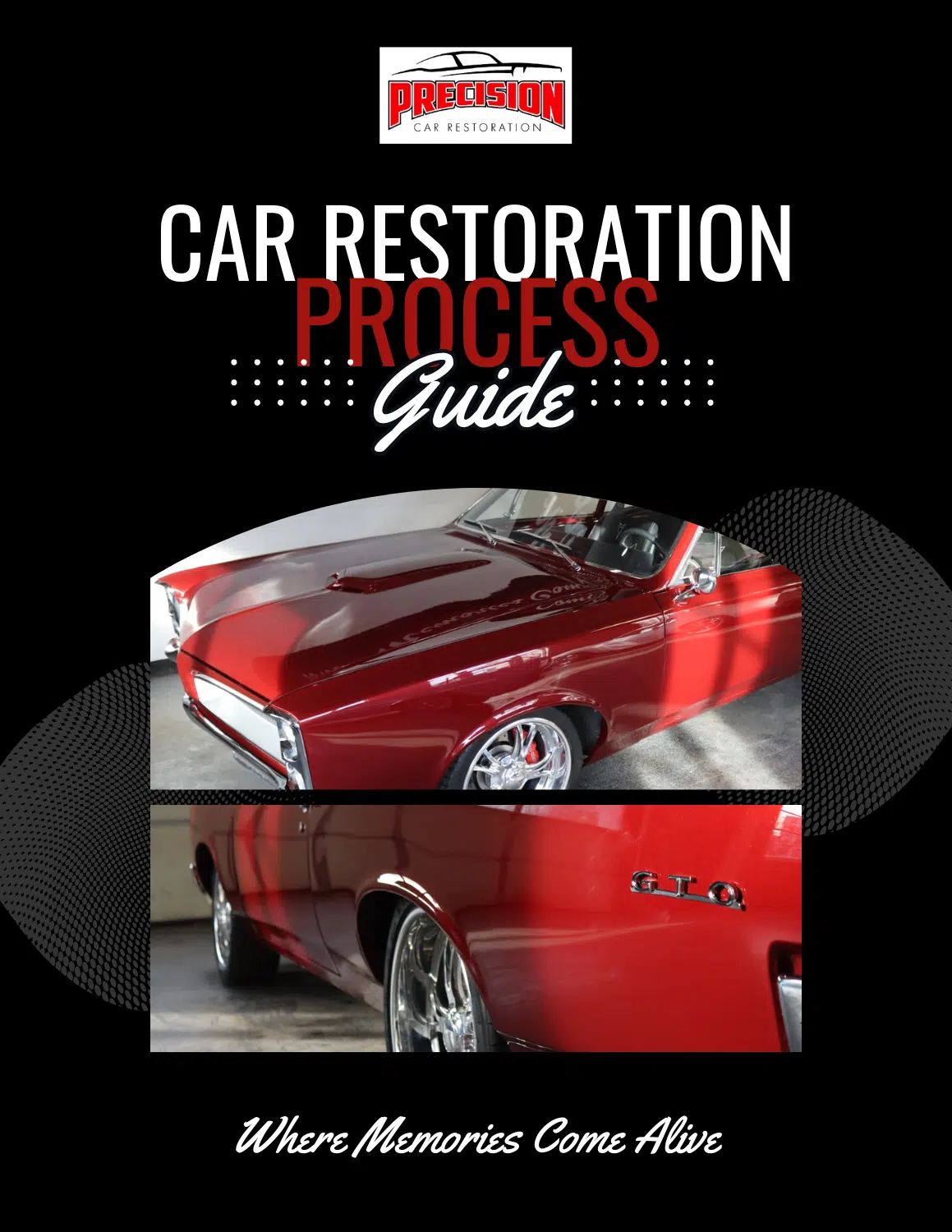
 Most people have never actually driven a classic muscle car before. Perhaps that’s why the term “muscle car,” has become interchangeable with “sports car” in popular culture. But once you actually get behind the wheel of a true muscle car, it’s easy to see why it’s unlike most other cars on the road –– sports cars included. What exactly makes muscle cars so special, though? And how is a sports car vs muscle car defined? We’ll tackle those questions and more here:
Muscle Car 101
There is no definitive list of “muscle cars” and “non-muscle cars.” And as the years have gone by, some of the lines that traditionally separated sports cars from muscle cars have begun to blur. For our purposes though, we’ll focus on a few features that set muscle cars apart from the rest of the pack.
- Power –– The first and most important element of a “true” muscle car is a power-packed engine. Think V8 and up. Muscle car engines are big and bulky, and they deliver an impact that the typical sports car engine simply can’t match. That’s one reason why the handling and feel of a muscle car is so distinct from other vehicles.
- Bulk and Body –– Since a muscle car has to house a thunderous engine, the body has to be big enough to support it. What’s more, the traditional look of a muscle car conveys a sense of the car’s potency; if you’ve ever seen a car that looks like it’s about to burst from the seams, it was probably a muscle car.
- American-Made –– Yes, muscle cars are a uniquely American invention. Sure, it’s possible for an overseas company to manufacture a muscle car –– but it doesn’t happen very often. A lot of it has to do with terrain. Put simply, the American landscape (particularly the West, and Southwest) lends itself to the unique capabilities of muscle cars.
Muscle Car vs Sports Car Pros and Cons
Muscle cars are fabulous road-trip cars. On smooth highways and straight roads, muscle cars can express their full potential. However, traditional sports-performance vehicles (sports cars) have lighter bodies that make them more adept at taking turns, and they generally handle more smoothly. In addition, a true muscle car can prove expensive –– even within the context of higher-end cars. At the end of the day muscle cars aren’t superior to other sports cars, merely different.
Muscle Car Restoration
The golden era of the muscle car was undoubtedly the late 1960s and early 1970s. Ford Mustangs, Dodge Chargers, and Chevy Chevelles from that era inspired millions of muscle-car fans across the country. If you’re a muscle car fanatic –– and you’ve always dreamed of restoring a great muscle car –– then get in touch with us. You can contact us toll free at 1-844-652-1966 today, or email me directly at [email protected]. We love talking about restoring classic cars!